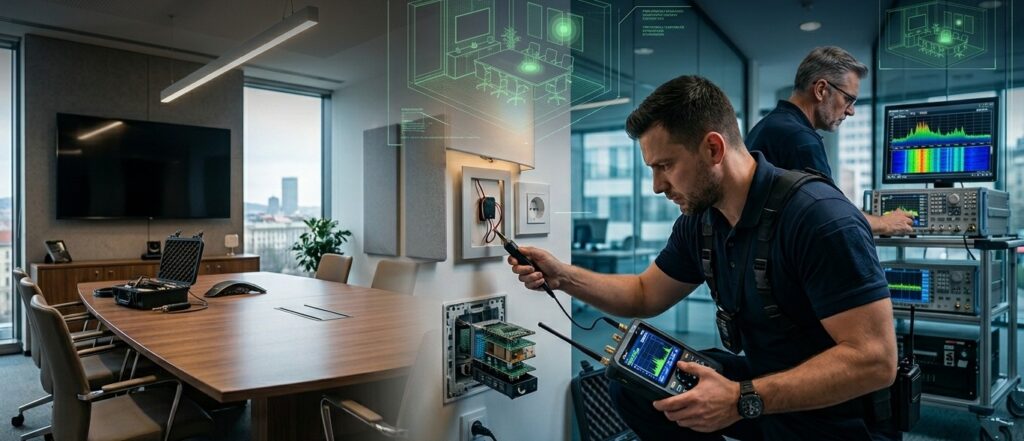
Bug sweeping, also known as surveillance detection, is becoming increasingly important in both business and private environments. As technology evolves, surveillance devices are getting smaller, more affordable, and harder to detect, making the protection of sensitive information a serious challenge.
In this article, we’ll explain when you might need bug sweeping services, how a professional inspection works, and what risks you can prevent.
What is bug sweeping?
Bug sweeping, or TSCM (Technical Surveillance Counter-Measures), is a specialized security service aimed at detecting hidden surveillance and eavesdropping devices.
This may include:
- detecting hidden microphones
- identifying listening devices
- locating hidden cameras
- analyzing wireless signals
The goal is not only to find devices but also to identify the source of potential information leaks.
When should you consider bug sweeping?
There are several situations where professional inspection is recommended:
- suspected information leaks
- confidential business discussions being exposed
- loss of competitive advantage
- legal disputes or sensitive personal situations
- unusual noises or unfamiliar devices in your environment
It’s important to note that surveillance is often not obvious, and in many cases only indirect signs indicate a potential issue.
How does a bug sweeping inspection work?
A professional inspection typically consists of several steps:
1. On-site assessment
Experts evaluate the environment, layout, and potential risk areas.
2. Physical inspection
A detailed search of the premises is carried out, checking all possible hiding spots.
3. Technical analysis
Using specialized equipment:
- radio frequency signal detection
- hidden device identification
- network and communication analysis
4. Reporting and recommendations
After the inspection, you receive a summary of the findings along with recommendations for improving security.
Why not rely on DIY solutions?
Although many detection devices are available online, they often:
- lack accuracy
- cannot detect modern surveillance tools
- provide a false sense of security
Professional bug sweeping requires advanced tools and expertise that go beyond consumer-level solutions.
How can you prevent surveillance?
Prevention is just as important as detection:
- regular security inspections
- securing sensitive areas
- limiting access to critical spaces
- using secure communication channels
A well-designed security strategy significantly reduces risks.
Conclusion
Bug sweeping is not only useful when a problem has already occurred. It also plays a key role in preventive security.
Whether in a corporate environment or private setting, a professional inspection can help identify hidden threats and restore peace of mind.
Request professional assistance
If you suspect surveillance or want to ensure your environment is secure, it’s worth consulting experts. A timely inspection can prevent serious damage.